Before He Had a Name
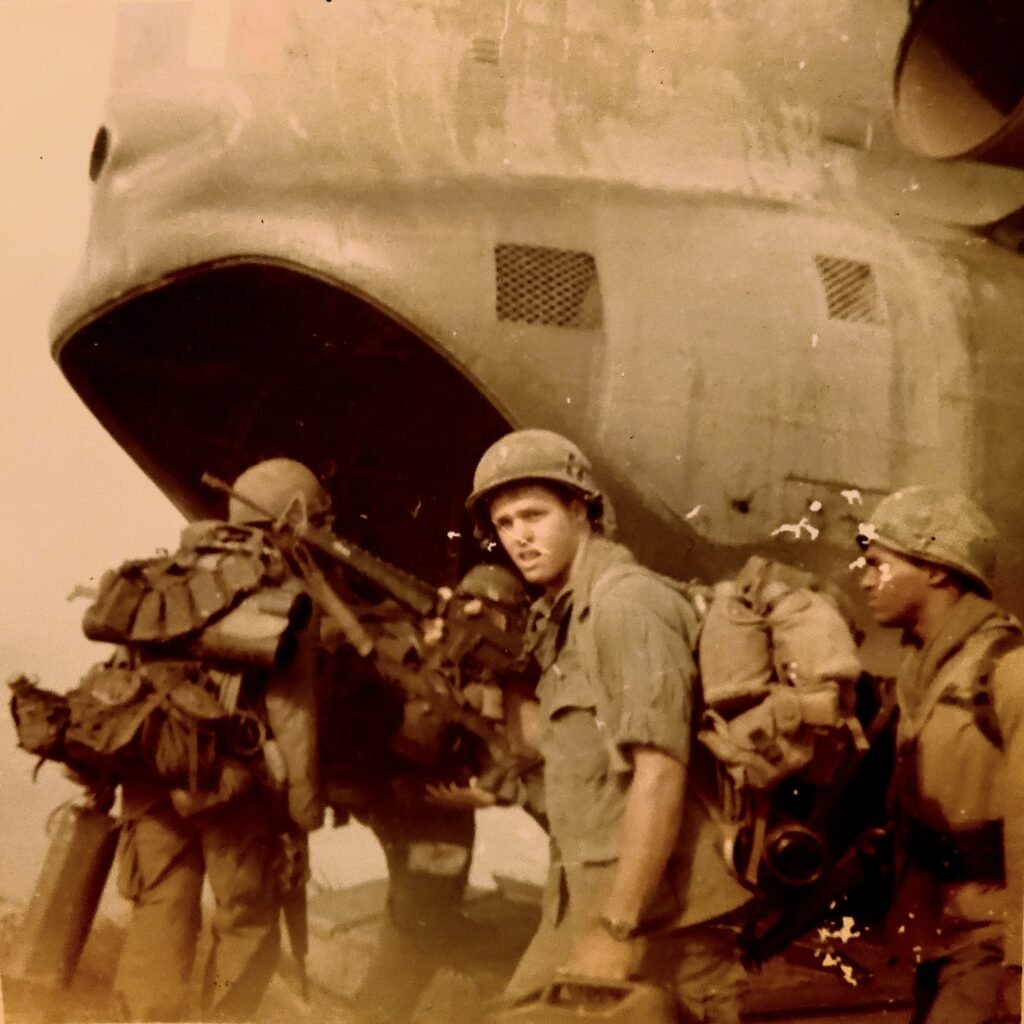
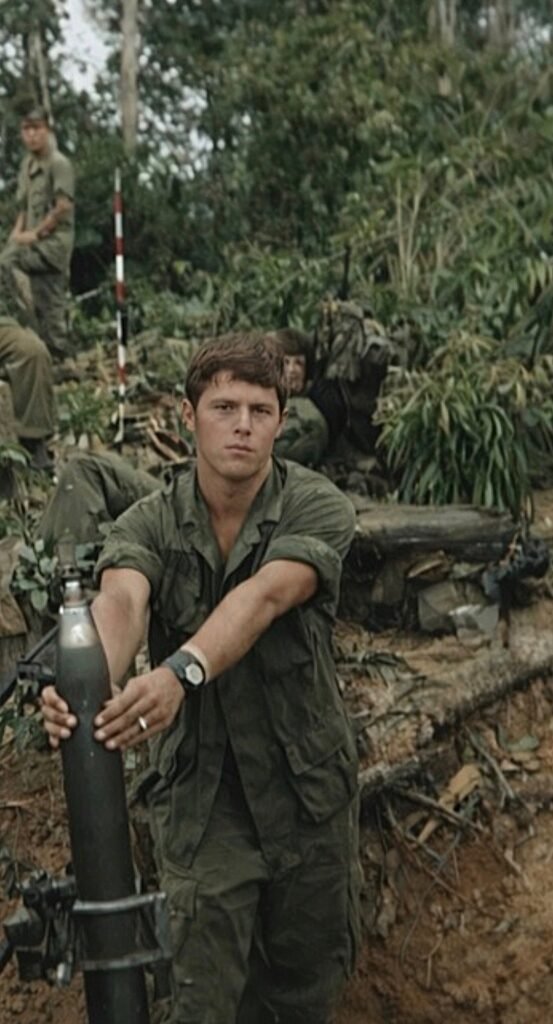
The 173rd Airborne Brigade was in the Central Highlands of Vietnam when Paul Reed joined the unit in early 1968. Much of his world had been reduced to the realities of combat—the mission, survival, and the men fighting beside him.
The soldiers on the other side were the enemy. He did not know their names, their families, their hopes, or the lives they had left behind.
Then a small diary entered his life.
A Diary From the Other Side
Following an assault on Hill 1064 in Kontum Province, that had cost Alpha Company two men, Reed joined a small reconnaissance patrol searching for a safer approach to the enemy position.
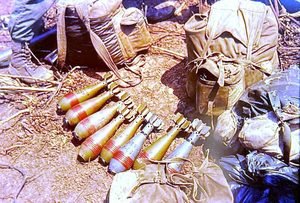
Hidden beneath the jungle canopy, the patrol discovered dozens of North Vietnamese backpacks.
Reed searched one of them back at their perimeter.
Inside was a tiny diary filled with beautiful handwriting in blue ink.
Looking at its pages, Reed remembers wondering:
If this diary could talk, what would it say now that it had fallen into enemy hands—mine?
The following morning, the diary and other contents from the backpack began their journey to America inside a reduced-size C-ration box.
Nearly Twenty Years of Silence
The box eventually found its way into the attic of Reed’s family home in Dallas.
There it remained unopened and largely forgotten.
For almost twenty years, the diary remained in the box and silent.
The Box Comes Down
Nearly two decades later, Reed’s life had unraveled. Back in his childhood home and struggling with memories of Vietnam, he began talking about the war he had rarely discussed.
One evening, something he said reminded his mother, Polly, of the box she had stored in the attic years earlier.
She returned carrying the C-ration box her son had mailed home from Vietnam.
She had never opened it.
The box sat beside Reed’s bed for several days.
When he finally began opening it, things believed forgotten began flooding his soul.
Eventually, he reached the little diary.
Polly asked a simple question:
“What does it say?”
Reed didn’t know.
And at first, he didn’t want to know.
The Diary Finally Speaks
Eventually the diary was translated.
Reed resisted reading the translation, but when he finally did, ordinary words began catching his attention:
Father. Mother. Home. Rice fields. Soldier.
They were glimpses into the life of someone Reed had known only as the enemy.
Then he reached the final page.
There he found a poem whose title consisted of a single word:
LOVE
The poem spoke of not holding a grudge.
For Reed, that word collided with something he had believed for nearly twenty years. The man who wrote these pages loved. He had a wife. He had children. He missed home. He wrote poetry.
The enemy was human.
And the two men were far more alike than Reed had ever imagined.
The diary had finally spoken.
The Second Battlefield
“It’s one thing to fire on a target and kill. But it’s altogether different when that target—someone you had known only by labels instead of as a human being—suddenly has a face, a name, a family—and you realize without question that he was human, just like you.”
Recognizing the man’s humanity did not immediately bring peace.
It brought guilt.
As Reed held the translation, its words began reflecting in ways that reminded him of a mirror. What he saw was nearly two decades of stubborn belief that the enemy was somehow less human than he was.
Now that belief was collapsing.
The man had also become, in Reed’s mind, the human face of an enemy he had blamed for the deaths of men he had fought beside and cared about.
Reed did not know who had actually pulled the triggers that killed his friends, and he could not place those deaths personally at the man’s hands. Yet the grief, anger, and hatred he carried caused him to lay the burden of those deaths at his feet anyway.
Forgiveness, Reed began to understand, did not require knowing who had pulled each trigger. It meant deciding whether he would continue carrying what the memories of those deaths had left inside him.
He could hold on to the hatred—or let it go.
Reed began shouting:
“I FORGIVE HIM.
I FORGIVE HIM.
I FORGIVE HIM.”
With those words, Reed remembers something inside him giving way. The hatred and judgment he had carried for years no longer held him behind what he describes as prison bars around his own heart.
In forgiving, Reed discovered that he was unlocking his jail cell and setting himself free.
The fighting in Vietnam had ended nearly two decades earlier.
But another battlefield had been there all along—operating silently and undiscovered for years in the gray matter between his ears. Only now had it finally surfaced.
He Was Alive
Reed came away believing what had happened to him was a story he was supposed to tell.
Eventually another idea emerged: perhaps the diary and belongings taken from that backpack should be returned to the family of the North Vietnamese soldier Reed had long believed died at his hand in Kontum during the war.
A documentary producer believed the family could be found. With assistance in Vietnam, the search began.
The family was located.
Reed prepared to travel to Vietnam believing he would return the diary to the family of a dead soldier.
Then, one day before departure, the news arrived.
His former enemy was not dead.
He was alive.
And he wanted to meet Paul Reed.
Face to Face
After the diary, ID card, and orders were translated, Paul Reed came to know the man by name and through the words he had written during the war.
Now Reed learned something he had never expected to see or hear.
The man behind those words was alive.
In 1993, Reed traveled to Vietnam carrying the diary and other belongings that had begun their journey from a battlefield twenty-five years earlier.
He had expected to return those things to the family of a deceased soldier he believed he had killed during the fighting in Kontum.
Instead, he was going to return them to his former enemy himself.
And for the first time, the two former enemies would stand face-to-face.
The Enemy Had a Name
When Reed finally met the man, the former enemy, the man standing before him was no longer an abstraction created by war.
He was no longer simply the enemy.
He was the husband, father, poet, and soldier whose words had helped move Reed from hatred toward forgiveness after nearly two decades of seeing the enemy through the lens of war.
The enemy had a name.
Nguyen Van Nghia
And now he had a face.
The humanity Reed had first discovered through the diary was standing directly in front of him.
Returning What War Had Taken
Reed had brought with him the things taken from Nghia’s backpack in Kontum.
Among them was the little diary.
Twenty-five years earlier, it had left Vietnam in a C-ration box shipped home by an American soldier who could not read a word inside it.
Now that same soldier had carried it back across the Pacific.
This time, he could see the poet who had written those pages—and he knew whose hands they belonged in.
Paul Reed returned the diary to Nguyen Van Nghia.
Full Circle
As Reed explained the extraordinary journey the diary had made—from Vietnam to America and eventually back to Vietnam—Nghia understood.
He raised his hand and, with one finger, traced a large circle in the air.
Full circle.
The little diary had crossed far more than enemy lines and an ocean. It had crossed cultures and languages, survived nearly twenty years in an attic, and challenged beliefs formed in a war that only former combatants could know and understand.
Along the way, it helped one former enemy discover the humanity of another—a man who, under different circumstances during the war, he might once have tried to kill.
Now the diary had returned to the man who had written its pages.
But something else had happened along the way.
The diary had not simply returned to where its journey began.
The two men had changed what that journey meant.
The Meeting Was Only the Beginning
The meeting in Vietnam did not bring Paul Reed and Nguyen Van Nghia’s journey to an end.
It gave the journey a new beginning.
Two men whose lives had been connected by war were now connected by something neither could have imagined when the diary first crossed their paths.
What began with words written during war grew into a friendship that would continue across years, cultures, languages, and thousands of miles.
There would be other journeys. Other meetings. Families would become part of the story. The friendship would cross the Pacific again.
And the little diary that once represented everything separating two enemies had become evidence of something neither man could have foreseen:
Reconciliation was possible.
What War Could Not Destroy
War had once taught two men to see each other as enemies.
A diary allowed Paul Reed to see beyond the label of “enemy” and discover the humanity of Nguyen Van Nghia.
Its words revealed a man.
Meeting that man revealed a friend.
And what followed became a journey neither Paul Reed nor Nguyen Van Nghia could have imagined when they stood on opposing sides of a war.
The battlefield had separated them.
The diary connected them.
Forgiveness opened the door.
Friendship carried them through it.
Their story continued for decades—and crossed boundaries neither man once believed could be crossed.
Some of that journey has been documented by television cameras and journalists in both the United States and Vietnam.
Much more of it belongs to the story told in the book:
What War Could Not Destroy
The journey did not end when two former enemies met.
In many ways, that was where it began.